Want to think about your garden as being able to contribute more to the health of the planet and still be beautiful? Our colleague James Swabey, (whose garden you may have visited as part of Hidden Hexham this year) recommends two books that could help you achieve that. Meanwhile, Wendy who looks after the woodland border in the Sele, suggests a couple of common plants which are great additions to any wildlife friendly garden.
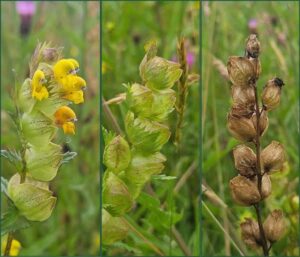
James is creating a stunning garden full of diversity and natural planting as well as ornamental and productive fruit and vegetable areas. He’s had particular success with encouraging Yellow Rattle plants into patches of grass where they inhibit grasses and so allow wildflowers to benefit. This image from the RHS shows the flowers as they mature and form the characteristic seed cases (rattles).
Here are his recommendations for books to inspire and inform.
Sustainable Garden-Projects ,insights and advice for the eco-conscious gardener. 2022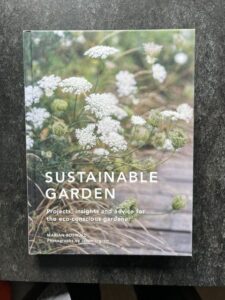
The Kindest Garden- A practical guide to regenerative gardening. 2025
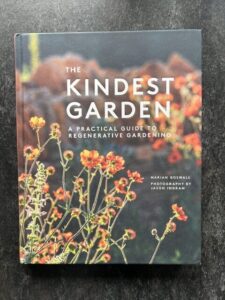
Both are written by Marion Boswell and published by Francis Lincoln. The first is more about minimising our impact on the planet whilst gardening and the second is more about how to make a more active contribution through gardening to the health of the planet. The philosophical approach she adopts is always interesting and well explained but what sets these two books apart from much of the ‘nature gardening’ press is that she demonstrates how to make the garden beautiful as well. Her aesthetic approach as a Landscape Architect is well illustrated by a good choice of photographs and diagrams. Those interested in the development of environmental buzzwords will notice the coining of the phrase ‘regenerative gardening’. Don’t let it put you off as it is explained clearly how it links to the practices around ‘regenerative farming’.
James says, if he could only put one on his birthday list it would be ‘The Kindest Garden’ as there is some overlap between the two books.
Thank you James!
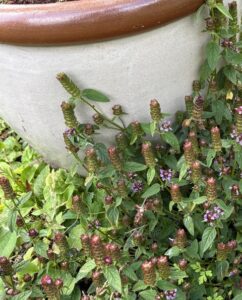
For immediate impact Wendy recommends 2 common plants from the mint family. Self-heal is a plant of grassy, often rather bare, places. We usually come across it in lawns where it can survive mowing (it evolved to be resilient to grazing) where it is a creeping, low plant. However, given its freedom it will grow into an impressive clump-forming plant with season-long flowers attractive to pollinators. Here is one plant in Wendy’s garden.
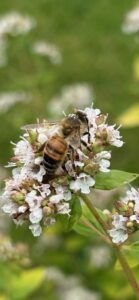
Her other recommendation is for Marjoram (a close, and sweeter cousin, of Oregano. Confusingly Marjoram’s latin name is Origanum vulgare). Here is a honey bee enjoying the nectar from a Marjoram flowerhead, again in Wendy’s garden.
So could you plan to give more space over to wildlife friendly planting? It doesn’t take a large garden. A yard, pots or a window box can all work well.
If you have your own tips and stories of success or questions about how to attract wildlife into your garden we’d love to hear them, hexhamnature@transitiontynedale.co.uk