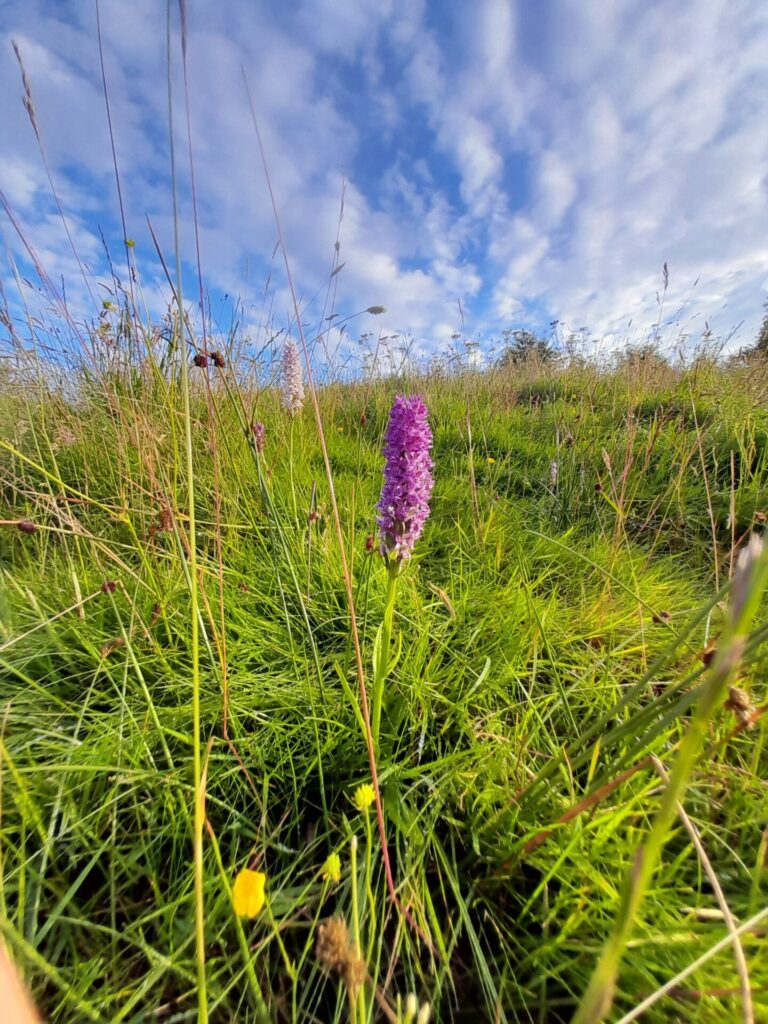
In the autumn of 2024 and the spring of this year we planted 464 wildflower plug plants and sowed 500g of wildflower seed in different sections of the long grass areas at the top of the Sele. In 2026 we will be going back to do more, but we will also be attempting to survey all the areas to see which did best – sowing or planting, autumn or spring, and we’ll continue to work with the Council to perfect our techniques for introducing more wild species into the park.
Of the species we planted or sowed we have so far spotted the following;
Bird’s foot trefoil, cowslips, common catsear, harebell, meadow buttercup, red clover, rough hawkbit, oxe-eye daisy, ribwort plantain, salad burnett, self-heal, small scabious and dog’s violet.
Passing the long grass areas at the end of June, Andy Lees spotted some of the catsear we had planted. On every single flower there was at least one hoverfly. Proof, if it were needed, that what are doing is benefiting pollinators.
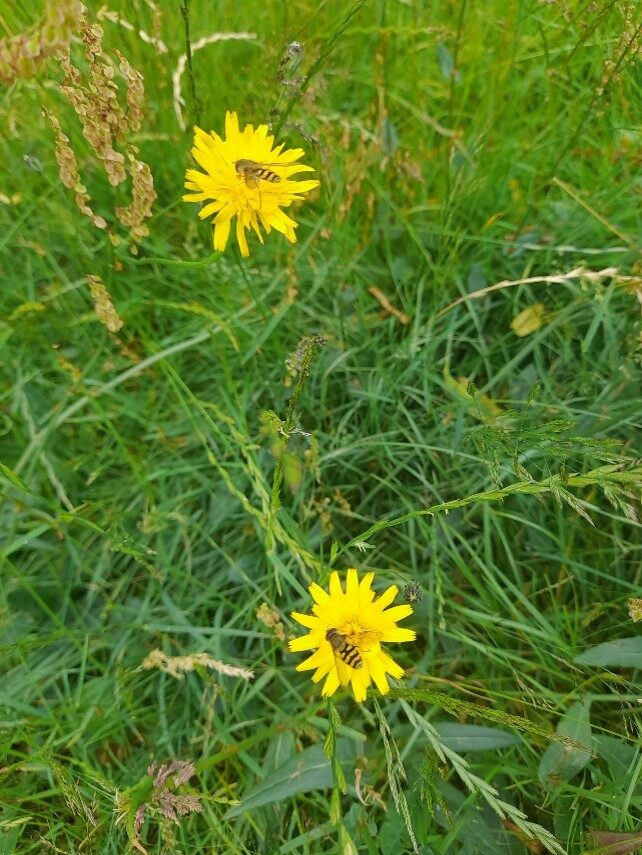
Elsewhere in Hexham our other grassland projects have been underway for various lengths of time. The meadow opposite the cemetery is now 6 years old and its neighbour at Shaws Park is in its second summer. At Shaws Park many of the wildflowers we sowed here have been spotted, but in low numbers. If you live nearby we’d be interested to have your observations.
We know from experience that diversity takes time to establish, but even just leaving the grass long to allow the existing wildflowers to flower and set seed is wonderful for insects, small mammals and birds.
At Highford Park where the grass and wildflowers have been allowed to grow for many years, we have a different challenge. Here, wildflower diversity will start to decline without any management as scrub and trees start to take over. The trick is to achieve a good balance of both. This winter we plan to organise a volunteer day to remove a few of the self-seeded conifers and some of the scrub which is encroaching on areas of species-rich grassland, and we’ll be considering how we might also cut and collect grass in areas which can’t be reached by the Council’s machine.