Is a River Alive? by Robert MacFarlane
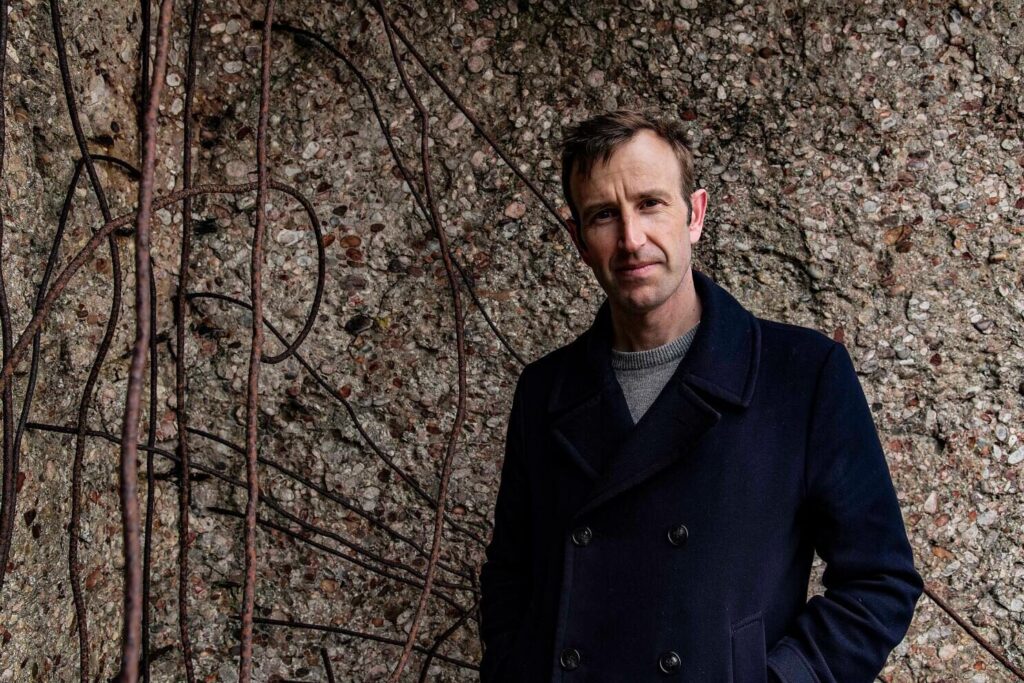
Review for Hexham Space 4 Nature by Matthew Greening
What sort of a question is that? Well an easy one according to the author’s son who on hearing the title of his Dad’s new book, said without hesitation, “…that’s going to be a short book then…the answer is yes!”
Perhaps not such an obvious answer though to many readers for whom the idea of a river being considered as a living being doesn’t sit well with a modern understanding of what it means to be alive. However, in three powerfully constructed accounts, MacFarlane tells us the story of some rivers in the world which (or who?) have held, and do still hold, a special spiritual and practical significance to the peoples living alongside them.
Many indigenous communities have always had strong connections with the freshwaters on which they depend for so much: food, water, transport and energy. It’s no coincidence that communities and settlements have mostly settled first near sources of freshwater.
For some, such as the Maori or First Nations people of North America, rivers are considered to be living, sacred ancestors. Rivers are deeply embedded in the culture and identity of many peoples. Somewhere in the progress towards a ‘developed’ world our relationship with rivers has changed. Now rivers are seen as a resource to be exploited, often to the point of exhaustion. At which point it is common to hear of a river being ‘dead’. Is it not equally valid to consider a river as alive?
Robert MacFarlane sees the world differently. His previous books, ‘The Old Ways’, ‘Underland’ and ‘The Wild Places’, invite us to see a world to which we may have become blinded. In ‘Is a River Alive’ he tells the story of rivers in Ecuador, India and North America and in doing so describes how, in different ways, those rivers have been recognized as being living entities ‘from source to sea’ and, as such, having inherent rights; rights to flow, rights not to be exploited, rights to be protected.
In case the reader assumes these are just remote examples where indigenous communities still hark back to earlier times, MacFarlane also references the River Ouse in Sussex where councillors have passed a motion recognising the rights of the river and a public ceremony on the Cam in Cambridge where the Rights of the River Cam were announced.
As more rivers gain the legal status of being alive the book explores the different ways in which rivers are recognized as having rights and how those rights are defined and defended by individuals, organisations and communities. MacFarlane sees these moves as being within the context of the Rights of Nature movement. There may be little argument with the logic of identifying and defending human rights. The rights of animals are widely accepted but the acceptance of the rights of mountains, rivers and forests is more problematic. However, not new. In 1977 Nan Shepherd famously put forward a similar argument in ‘The Living Mountain’.
MacFarlane tells us how his own journey towards the realisation of the rights of rivers has been long. He explores this journey with writing which seems to parallel the course of a river with it’s contrasts in flow, meandering route and the interactions with it’s surroundings.
The reader is invited to take a moment to consider our own relationship with rivers and what being alive means. It’s a consideration we can’t resolve with logic and reasoning alone. It seems to require a different connectivity with the natural world. A connectivity which MacFarlane experiences more extremely by travelling down the Mutehekau Shipu in Easter Canada; a river threatened by development in the form of hydro-electric dams. Before the journey he is advised by Rita, an Innuit poet, “Don’t think too much with your head … You will be transported by the river – who will speak through you”. He travels by kayak and powerfully describes how he develops an intense relationship with the river and it’s environment.
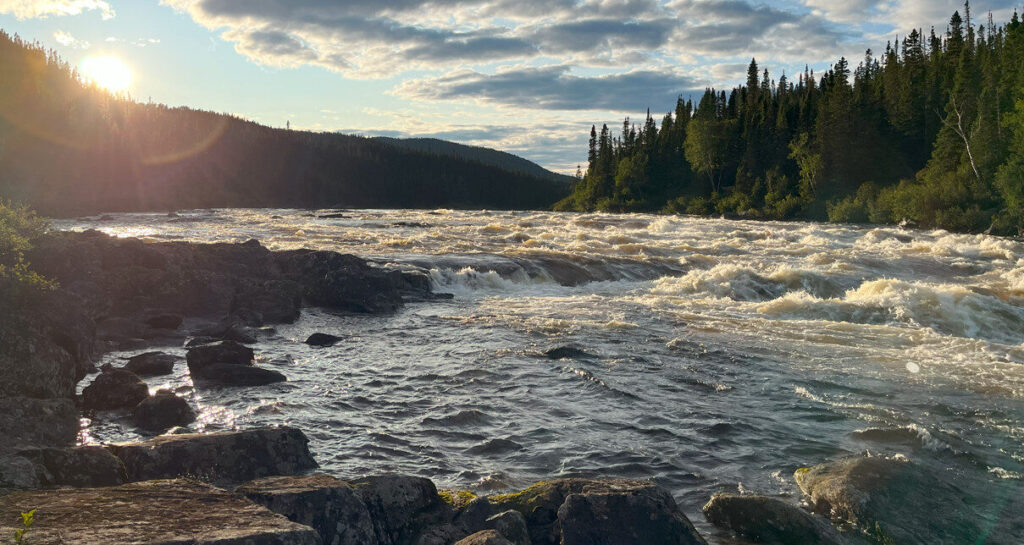
There are moments of delight and moments of jeopardy. The outcome is an experience of profound change and a new realisation of what it means to be so closely connected with a river. He finds “some vast and unknowable other life-way”.
It is clearly a journey which has cemented MacFarlane’s conviction that a river is a living being to be respected and protected. Is his book going to persuade readers, who may not have connected so closely with some of the world’s great rivers, that all rivers are indeed alive? If it is read with an open mind, a receptive heart, and combined with spending any time by or in running freshwaters then quite possibly.
Is a River Alive? by Robert MacFarlane
Published by Hamish Hamilton
ISBN 978-0-241-62481-4